LAWS, ETHICS & NEWS LITERACY


VIEW ALL OF OUR POLICIES HERE

View all of our policies here

The most formative piece of advice I’ve ever received was: Don’t think, "What job do I want?" Think, "What problem do I want to solve?" For me, the answer has always been clear: I want people to care about the news again.

It’s no secret that it’s hard to get teenagers to care about the world around them, especially teens in a Nebraska suburb. Most of the clicks on our student news site came from homecoming court announcements and football game recaps. But I knew our publication could be more than a scoreboard; it could be a vehicle for change and understanding.

I wanted every student in my school to be informed, regardless of where they stood on the political spectrum. That’s how Wingspan Weekly was born.

Each week, I curate a list of top stories across seven categories: U.S., international, local, entertainment, sports, GEHS, and “caught our attention,” then summarize them into one article for our audience. Every story must come from a non-biased source, then be discussed by my entire staff before publication, which brings a range of perspectives to the table. 

What started as a small idea of collecting seven stories a week has become a way for students with completely different perspectives to engage with reliable, factual news on their own school's news site.  Wingspan Weekly taught me that journalism isn’t just about telling stories; it’s about connecting to the world and people around them so they can make informed decisions and be civically engaged citizens.
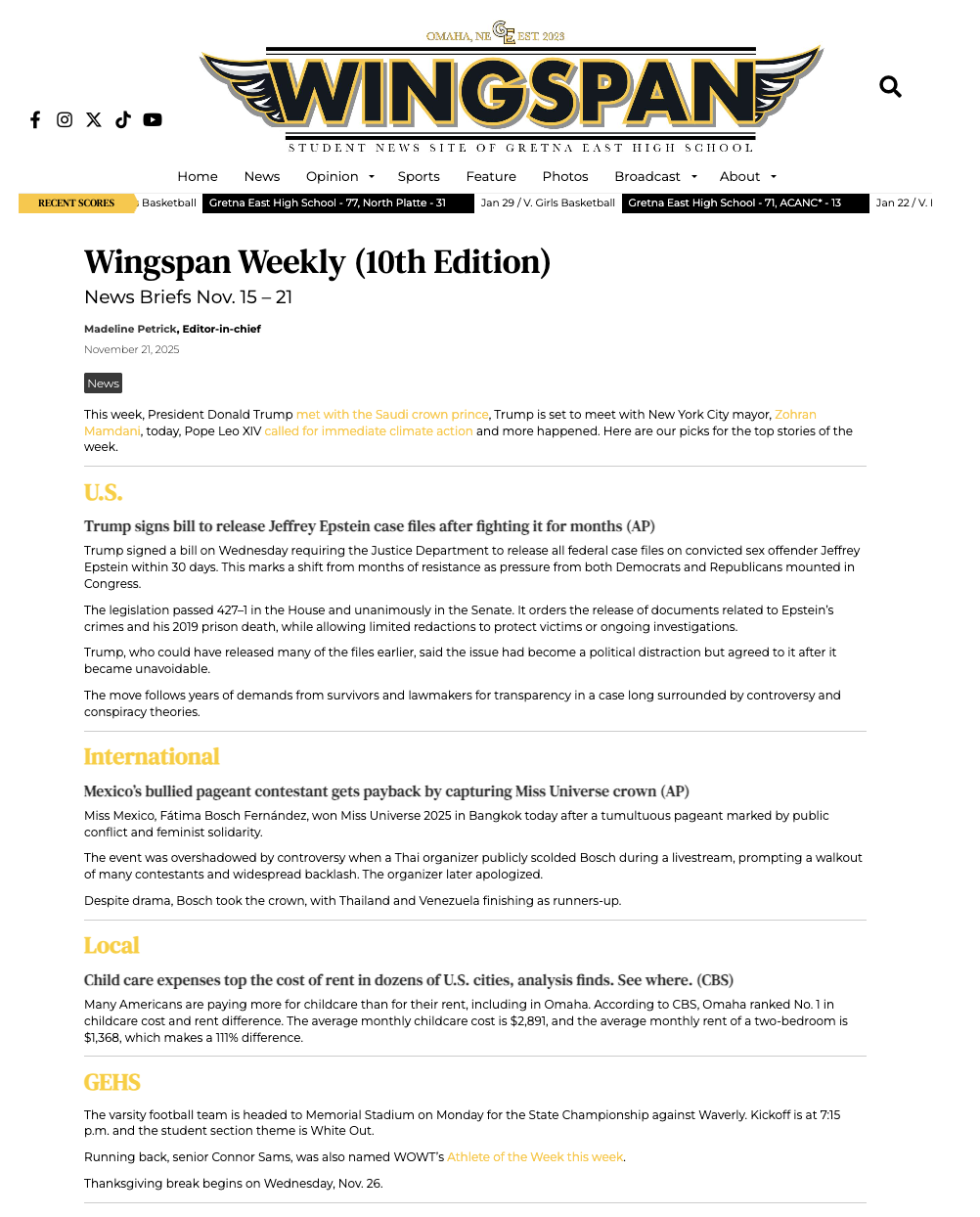
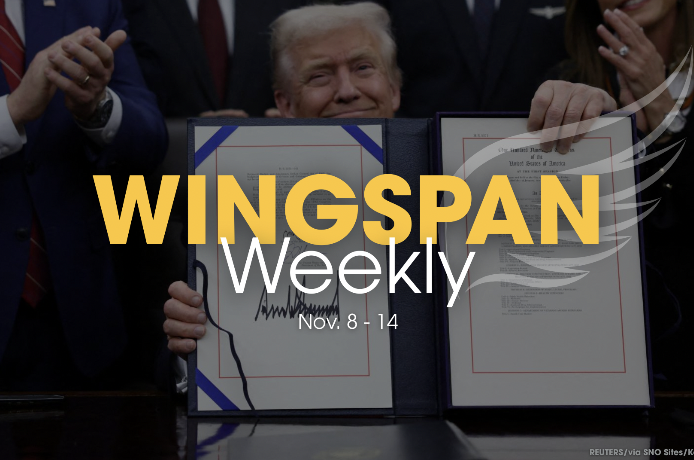
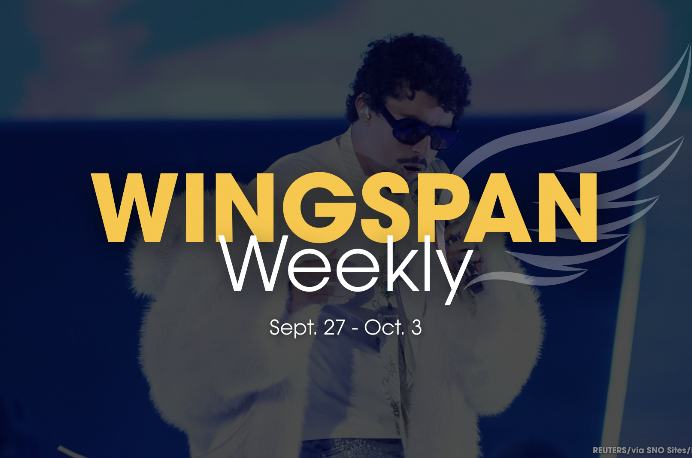
My favorite Wingspan Weekly Editions:
I used to think being an editor-in-chief meant you had to set deadlines and work with reporters; turns out, you also have to be a lawyer. Well, sort of.

In my editing, I make sure that every piece we publish uses unbiased, nonpartisan language and viewpoints (unless it is clearly labeled as an opinion piece). Whether that means we can't overly cheer on the football team after a big win, or that we cannot bash lawmakers without evidence, every word is checked to ensure that it is truthful and professional.

Fortunately, we at The Wingspan have not had many conflicts with our audience or sources, but when they have arisen, we've taken necessary action to resolve them while still maintaining journalistic and legal integrity.

One example occurred when a source felt they were incorrectly quoted. This was quickly resolved as all of our reporters are required to keep the audio recordings of their interviews. While they were not misquoted, we made an editorial decision to remove it anyway, as the source felt it represented them in a bad light.

Similarly, another situation arose when our audio recordings came in handy. An administrator claimed they were misquoted by a reporter and threatened to institute prior review for our publication because of it. On the audio recording saved by the reporter, it was clear that the administrator was not misquoted. The reporter and I set up a meeting to clarify this with them; however, beforehand, we contacted the Student Press Law Center to learn more about how to protect The Wingspan from prior review. In the end, the SPLC advised us on how to educate our administrator on the dangers of prior review and proposed alternate methods of review.

Going into the meeting, I had two goals in mind; show the administrator the truth of the recording and protect The Wingspan from a legacy of prior review and censorship. When the reporter and I sat down with the administrator to discuss these things, they conceded and honored our wishes to remain without any prior review at all.

Both of these examples highlight how the Wingspan protects itself to always maintain journalistic integrity.

Similarly, to protect ourselves from confusion in our reporting, we also instituted an

"Opinion Disclosure" for all of our opinion pieces, ensuring that our commitment to unbiased reporting isn't misconstrued by our audience.

In all, The Wingspan cares deeply about maintaining high-caliber journalist integrity, whether that be through careful sourcing, transparent editorial decisions and policies, or standing firm against outside pressure that threatens our independence. I've learned that an editor-in-chief's job isn't to edit or lead a publication; it's to lead the fight against unjust, unlawful actions and protect their publication's independence and integrity.